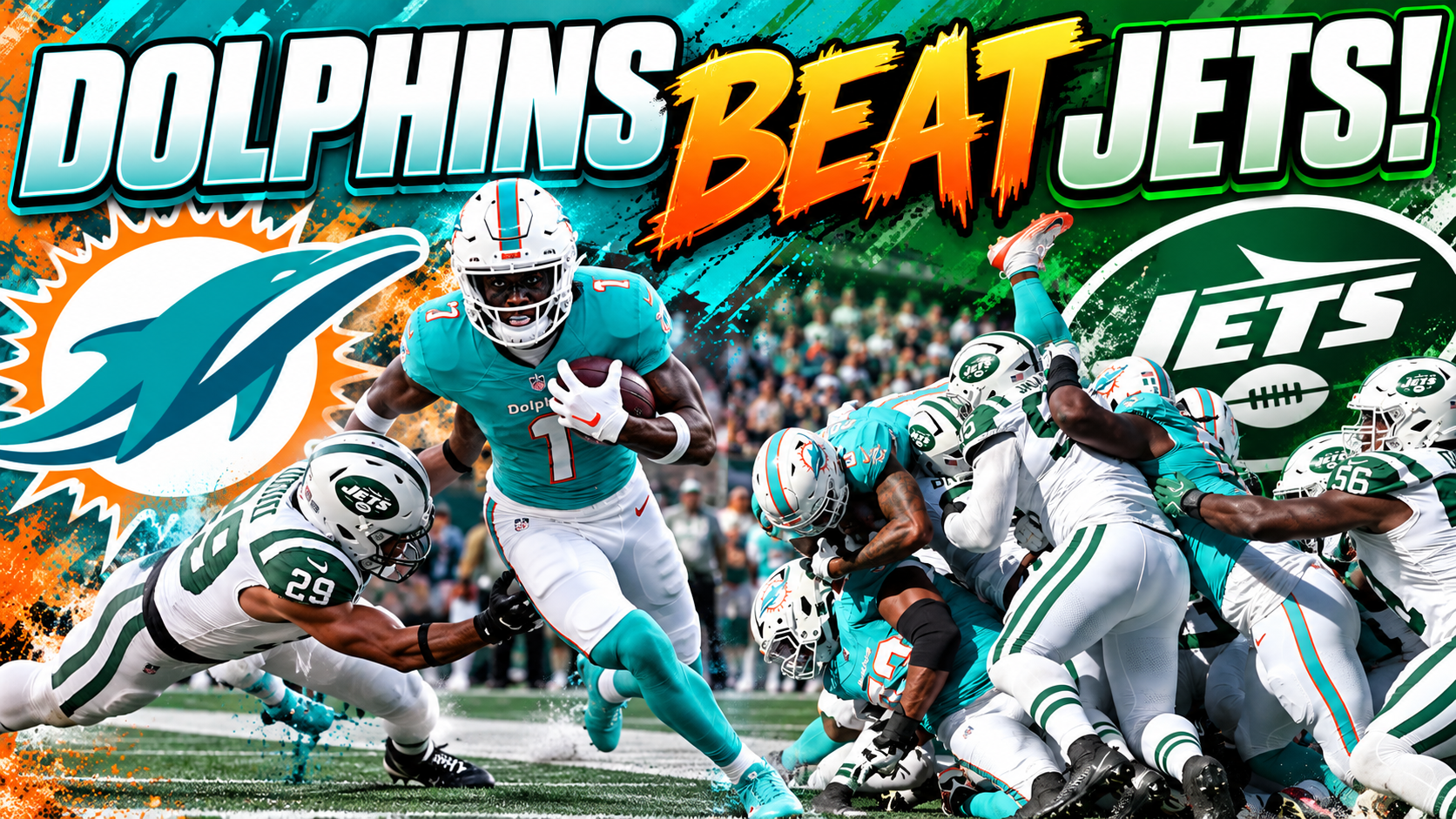
Dolphins got the win, looked good on offense, and sank the Jets season…not too shabby
The Miami Dolphins finally entered the win column Sunday with a 28-25 victory over the New York Jets. It wasn’t perfect, particularly in the second half, but the most encouraging takeaway wasn’t the victory itself. It was HOW Miami played football, offering a glimpse of the offensive philosophy this team has been building toward.
For much of the season, Bobby Slowik’s offense has struggled to establish consistency. Too much outside zone, too little downhill running, and an unwillingness to consistently attack the interior have left Miami behind schedule and Malik Willis facing unnecessary pressure.
Against the Jets, that approach noticeably changed.
Slowik finally leaned into the personnel…and added a very nice wrinkle.
Dolphins Offense Adjustments
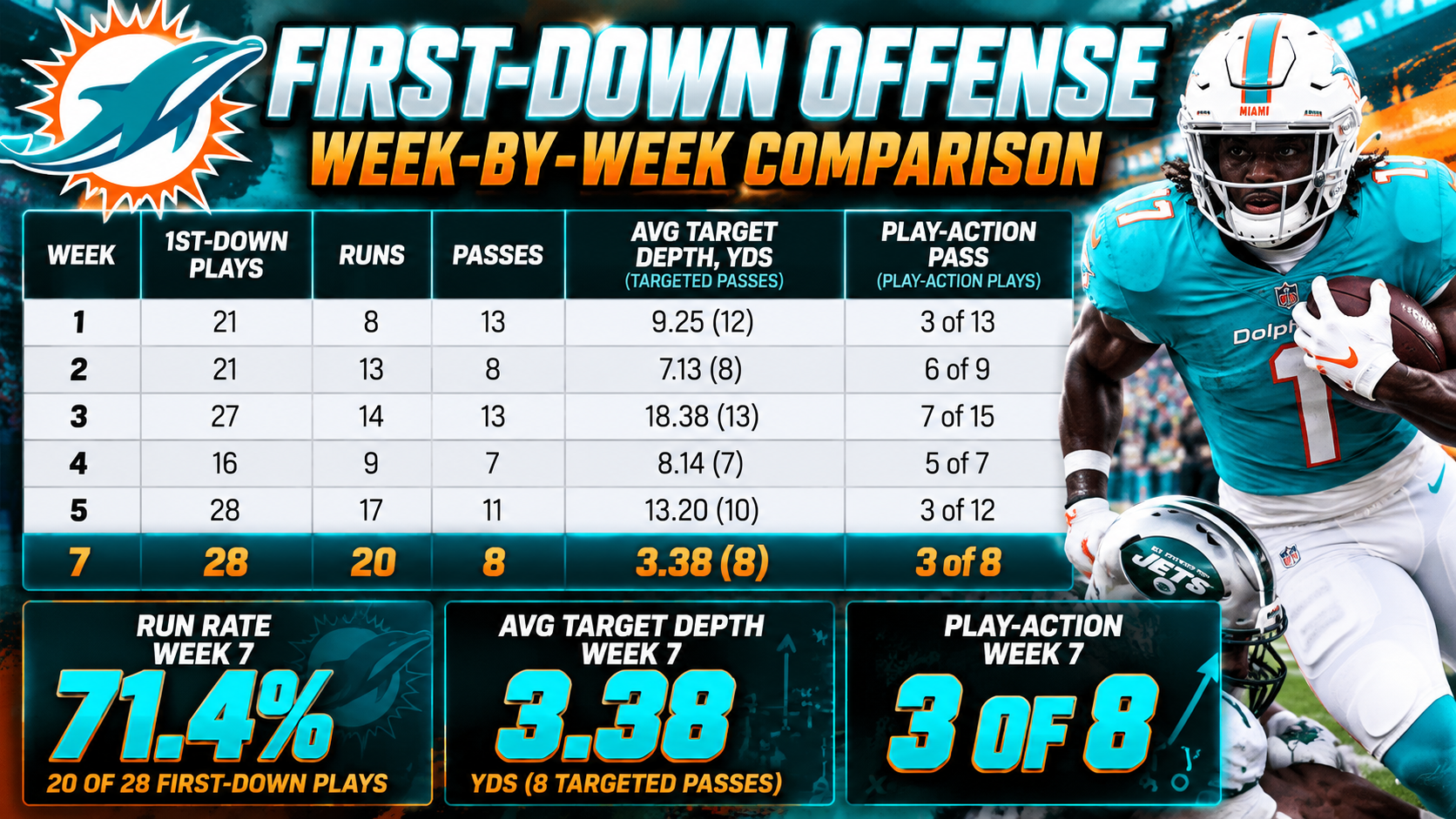
Miami dramatically reduced its reliance on outside zone (only 9% instead of the previous weeks average of 25%) incorporated considerably more 12 personnel with two tight ends and attacked downhill. The results were punishing runs, sustained possessions, and an offense that controlled the game’s tempo.
Ollie Gordon finished with 103 rushing yards, but the important development wasn’t simply his production. It was the manner in which Miami created opportunities for him.
Kayden Proctor was particularly impressive, pulling into space and opening rushing lanes. Jonah Savaiinaea delivered a critical block on Willis’s late quarterback sneak, while Patrick Paul and Aaron Brewer contributed to an offensive line performance that showed what this unit can become.
And Willis benefited enormously.
Better Framework & Settings Set Willis Up
Willis wasn’t perfect, but this was arguably his best performance as a Dolphin. He avoided costly mental mistakes, made several impressive throws, extended plays with his mobility, and delivered important first downs and a touchdown. But Slowik shifted his first down philosophy and that made a world of difference. Not only was this the highest run rate on 1st down, lowest outside zone usage, but it was also by far the lowest avg depth of target.
The difference wasn’t simply Willis suddenly becoming a better quarterback. Miami finally provided an offensive framework that emphasized his strengths while limiting his weaknesses.
There were encouraging developments among the skill players, too.
Greg Dulcich continued to demonstrate his value as both a receiver and an improving blocker. Chris Bell showed impressive ability after the catch, turning a short reception into a meaningful gain through contact and traffic.
Caleb Douglas reminded everyone why his development matters, producing explosive plays, including a long touchdown, while demonstrating the potential of Miami’s young receiving corps.
Defense Came Through as Well
Defensively, the secondary still needs work, but the front delivered when it mattered. Zach Sieler, Josh Uche, and Chop Robinson helped produce a crucial goal-line stand, while Michael Taaffe added an interception.
Perhaps most importantly, Miami’s sustained offensive possessions helped keep its defense rested.
You can bet with the best pay per head that his doesn’t mean the Dolphins have solved everything. Slowik still made questionable calls, Willis has limitations, and the roster needs additional talent.
But the Jets game offered something more valuable than a single victory: evidence that Miami’s offensive philosophy can work when its execution matches its personnel.
The Dolphins didn’t improve simply because they ran more or Willis played better.
They improved because they changed HOW they played.