

Dolphins need offensive linemen; there’s are plenty to choose from. Here’s four:
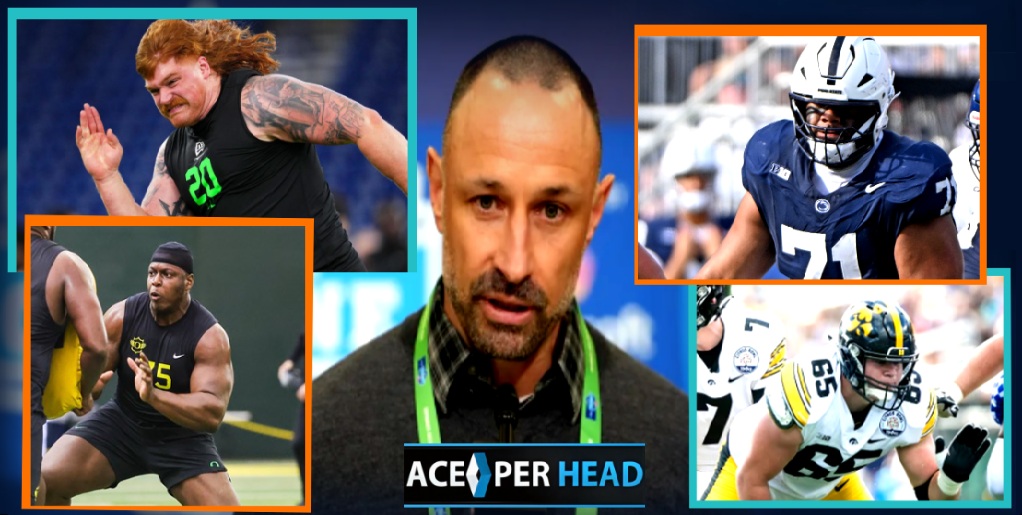
The Miami Dolphins have entered one of the most pivotal drafts in recent memory. With a new leadership group in place and a bold move away from Jaylen Waddle, the organization has made one thing clear: this is no longer about collecting talent—it’s about building a system.
Armed with seven picks in the top 100, Miami isn’t just drafting players. They’re defining identity.
And nowhere is that more important than along the offensive line.
As the NFL continues its gradual shift toward more physical personnel groupings and interior run emphasis, the Dolphins must decide which prospects truly fit what they are becoming—not just who looks good on paper.
Let’s look at four players who will be options for Miami and see if they fit.
Pregnon — The Temptation
Physically, Emmanuel Pregnon looks like exactly what you’d build in a lab.
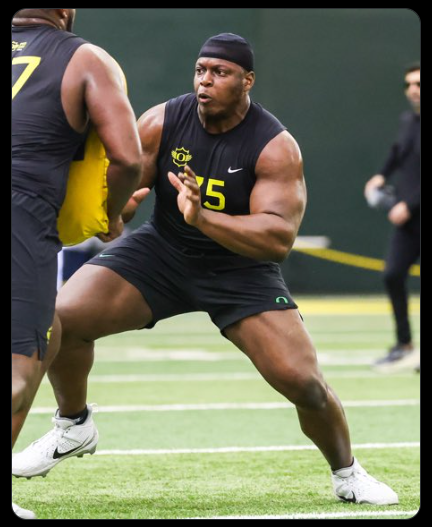
- Massive frame
- Elite strength profile
- Did not allow a sack this past season
- Strong pass protection foundation
On the surface, he fits the league’s shift toward power inside.
But the deeper evaluation raises questions.
Pregnon’s biggest issue isn’t strength—it’s movement efficiency. While capable, he can look stiff when working laterally, particularly against agile interior defenders. In a system that may still lean heavily on outside zone concepts, that becomes a concern.
There’s also a technical element:
- Leans forward at times
- Base can get too wide
- Vulnerable to inside counters
For many teams, Pregnon is a plug-and-play starter.
For Miami?
He may be just outside the ideal scheme fit, especially at his rising draft cost.
Vega — The Prototype With a Price
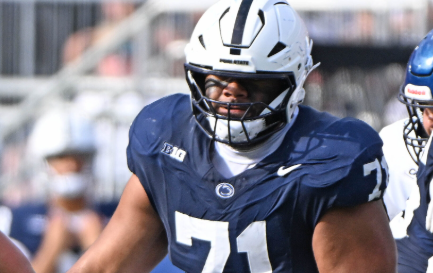
Olaivavega “Vega” Ioane represents a similar archetype to Pregnon:
- Big
- Physical
- Built for trench warfare
He fits the growing league emphasis on A and B gap control, and could immediately help offset interior issues—particularly alongside a center like Aaron Brewer, who struggles against raw power.
The appeal is clear.
But so is the dilemma.
Vega is more designed like Pregnon for Gap and Inside Zone schemes, and he’ll likely land in the late teens to early 20s, which creates a value question for Miami. If the Dolphins stay put, he may be an overreach in value. If they trade back, however, he becomes one of the most logical targets in the draft.
This is where philosophy meets strategy:
It’s not just about getting a good player—it’s about getting the right player at the right value.
Bo Stevens — The Risk
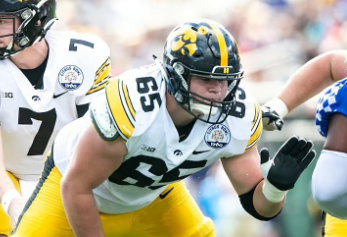
Beau Stevens flashes on tape.
- Good movement ability
- Strong awareness
- Competitive demeanor
In limited viewing, he draws attention for the right reasons.
But the red flag is hard to ignore:
Injury history
- Missed time in multiple seasons
- Lost an entire year
- Continued durability concerns
At a position defined by physical punishment, that matters.
Stevens is the kind of player you take late, cheap, and with tempered expectations
Not as a cornerstone piece in a critical draft.
Dunker — The Value Play
Gennings Dunker may be the most intriguing name in this group.
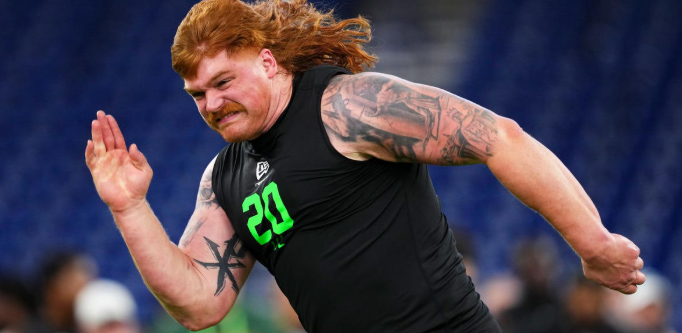
Originally a tackle, he projects more naturally inside at guard:
- Strong build
- Physical play style
- Good durability
- Better value range
While he shows stiffness on the edge, that limitation may actually disappear when moved inside.
At guard, his traits become more functional:
- Power translates
- Movement demands decrease
- Physicality becomes an asset
And most importantly he offers value if he can be had late in the 2nd Round and even better in the 3rd.
Projected in the late second to third round, Dunker allows Miami to:
- Address the offensive line
- Maintain draft flexibility
- Add additional assets through trade-down scenarios
In a draft where Miami must maximize return across multiple picks, that matters.
The Bigger Picture — Scheme Over Talent
What ties all four prospects together isn’t just evaluation—it’s philosophy.
The Dolphins’ decision to move on from Waddle signaled something deeper:
They are committed to building a system—and they are willing to make uncomfortable decisions to do it.
That means:
- Offensive line size matters
- Interior strength matters
- Scheme fit matters more than raw ability
Pregnon and Vega represent the physical ideal.
Dunker represents the value-aligned fit.
Stevens represents the risk-reward gamble.
If Miami stays true to its emerging identity, the draft won’t just be about who they like—you can be with the best pay per head that it will be about who fits. But the Dolphins have plenty of other options and I’ll get to them one batch at a time.
The key is Sullivan and Hafley nail this draft and part of that is adding some quality offensive linemen.
Go Phins!!!