Phins Built to Pass, Priced to Lose in NFL Rushing Cycle
Phins Built to Pass, Priced to Lose in NFL Rushing Cycle
The Phins only great era was driven by a tough run game…maybe we should try adding some of that
The Miami Dolphins came out like gang buster in the 2022 Season and halfway through the 2023 Season, but since then the offense has been in a steep nosedive. We can talk about the quarterback and fairly put a heap of burden on Tua, but this league has been moving steady but surely to a new offensive cycle, and the Dolphins haven’t built to take advantage of it.
Over the last three to four years the NFL has moved to a more physical offensive style to get small, pass focused defenses on their heels. The NFL is always changing and adapting and it’s critical for team builders and coaching staff to grow and learn along with it.
Unfortunately for Phins fans, Chris Grier and Mike McDaniel haven’t kept up.
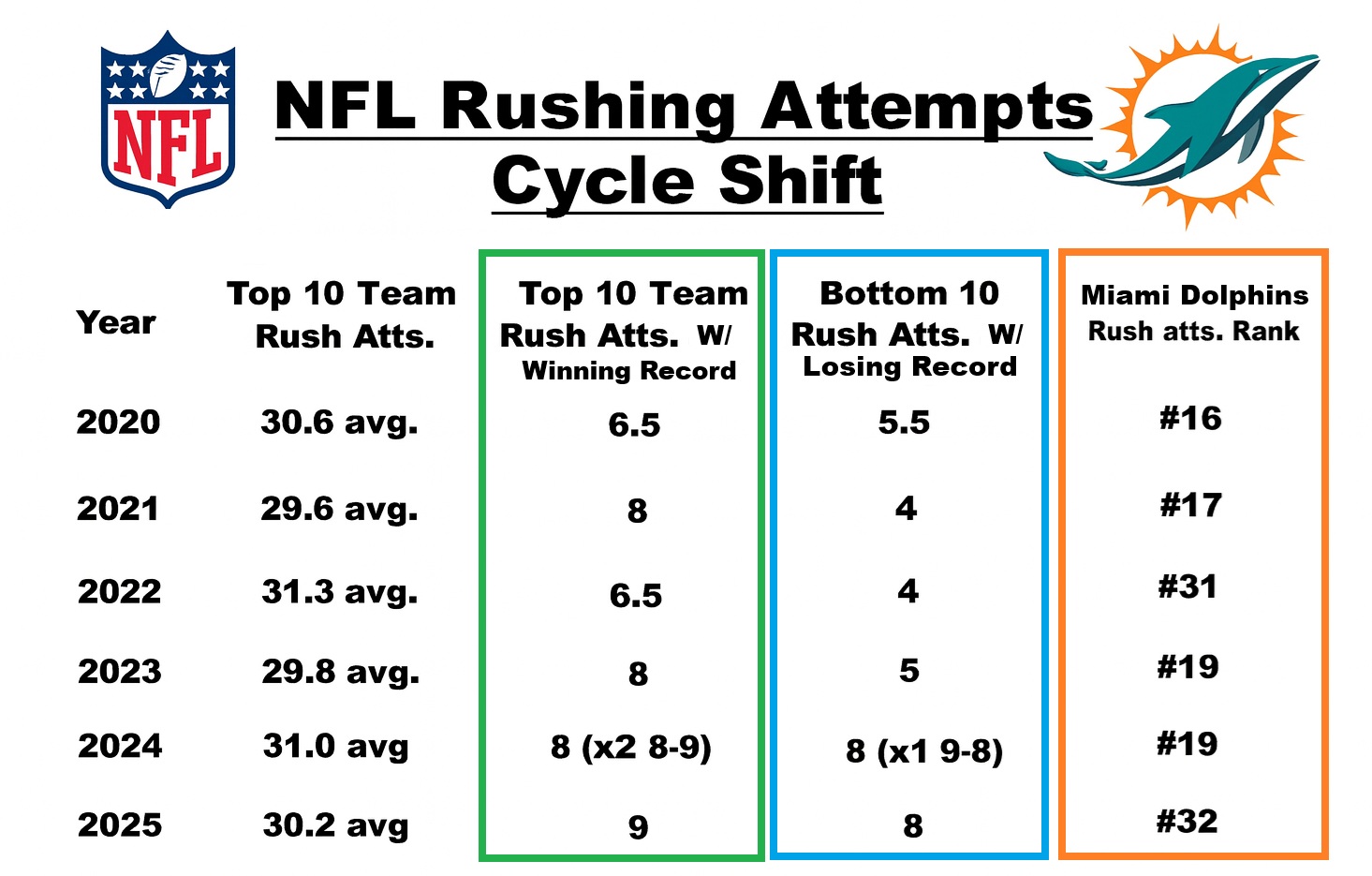
I put together a graphic below to show how hard the Dolphins have been running against the grain to this new NFL cycle.
Old is quickly becoming in new in the NFL
The chart above tells a blunt story in plain numbers the NFL is an environment that rewards teams who can impose themselves on the ground. Miami’s average rushing-rank across these six seasons sits around the low-20s, a steady signal that the team hasn’t committed to being a run-first identity. The result: the Dolphins are often playing catch-up inside a league whose “cycle” increasingly swings toward teams that can reliably run and control tempo.
If you want a deeper dive on the information below you can check out my podcast on this here.
Look at the simple relationships in the data: the top-10 rushing teams in this window tended to cluster around stronger win totals (years where the top-10 average win totals sit north of ~7.5 are the same years the league’s run-based teams performed well), while teams in the bottom-10 for rushing show lower win averages. Miami, with its middling-to-poor rushing rank most years, hasn’t consistently participated in that successful run-game cohort. Put plainly: when the NFL’s cycle favors grinding down opponents with carries and clock control, you can bet with the best pay per head that Miami too often shows up underbuilt for that fight.
Tua bears responsibility, but Grier’s team design trumps all
Football comes down to leverage and choice. Teams that can run set the terms of engagement: you shorten the game clock, you get play-action looks, you punish over-aggressive defenses that load the box with blitzes, and you protect quarterbacks by giving them rhythm and a cleaner pocket. Miami’s roster construction and play-calling in many of these seasons have skewed toward pass efficiency and pace — high-variance approaches that score quickly but also surrender control when the run game falters. When opponents match or exceed that fast pace with physical fronts, Miami is left with fewer answers.
A team built to run requires investment: interior offensive line toughness, a reliably productive bell-cow or dual-threat back, and play designs that commit to sustained rushing sequences. The Dolphins’ personnel and play-design choices over this stretch have not consistently prioritized those pieces, which helps explain why their rushing rank sits where it does and why they’ve struggled when the league’s tide turns toward run-control strategies.