What did the 2025 cellar dwellers lack? Will the 2026 do better?
Predictions of a disastrous 2026 season have followed the Miami Dolphins all offseason, but history suggests those fears may be overstated. A closer look at the NFL’s worst offenses from last year reveals that teams finishing with three to five wins all shared the same collection of critical flaws—many of which Miami has spent the offseason addressing.
You can bet with the best pay per head that the common denominator wasn’t simply poor quarterback play or a difficult schedule.
It started in the trenches and built out to the play action game…or lack there of.
Play Action IS the Cycle Sweet Spot
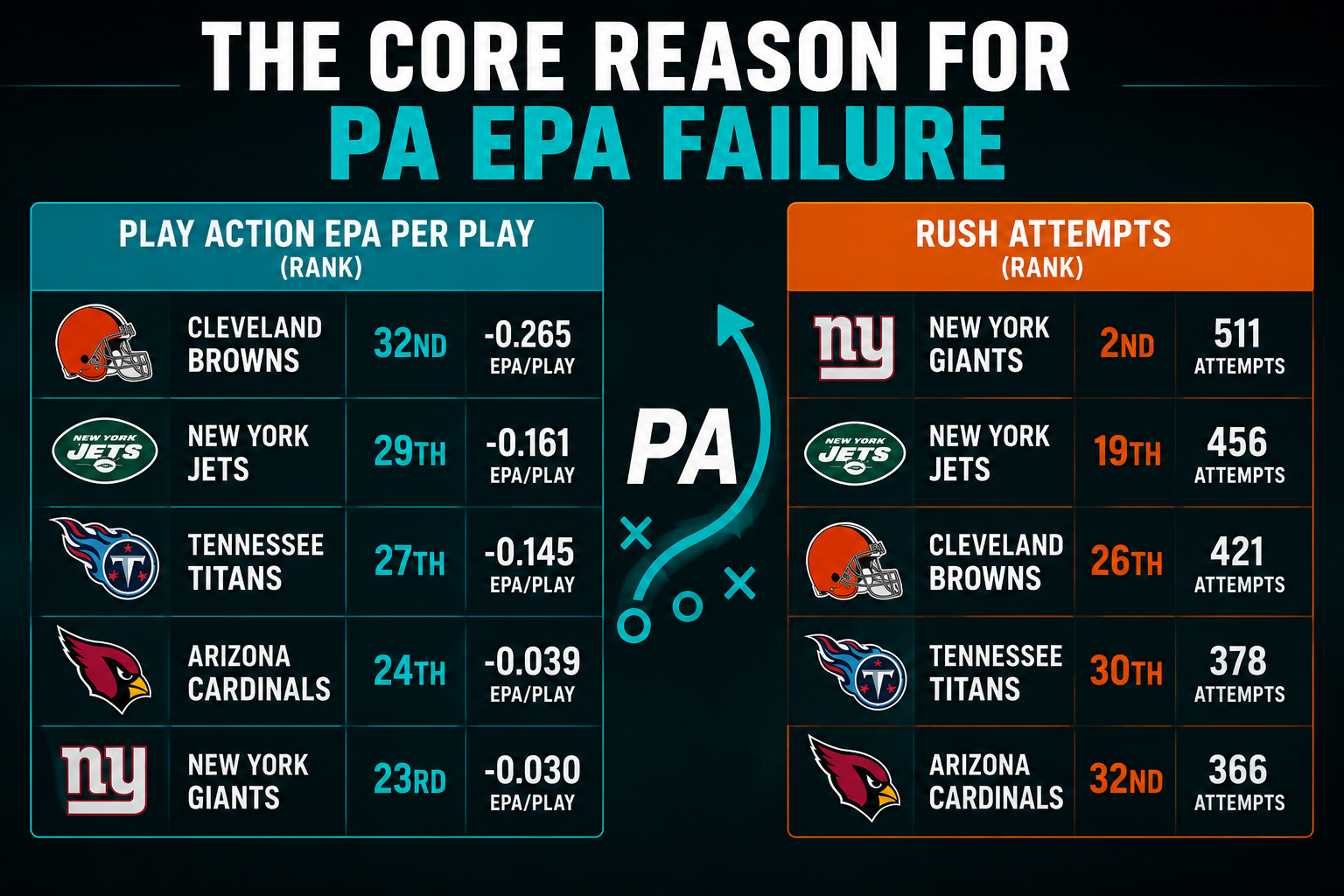
Teams like the Browns, Titans, Cardinals, Jets and Giants all ranked near the bottom of the league in play-action efficiency and win totals, but the deeper issue was offensive line performance. Poor pass protection consistently disrupted play-action concepts before they had a chance to develop, while ineffective rushing attacks prevented offenses from creating favorable situations on early downs.
Another trend emerged once those offenses reached second down.
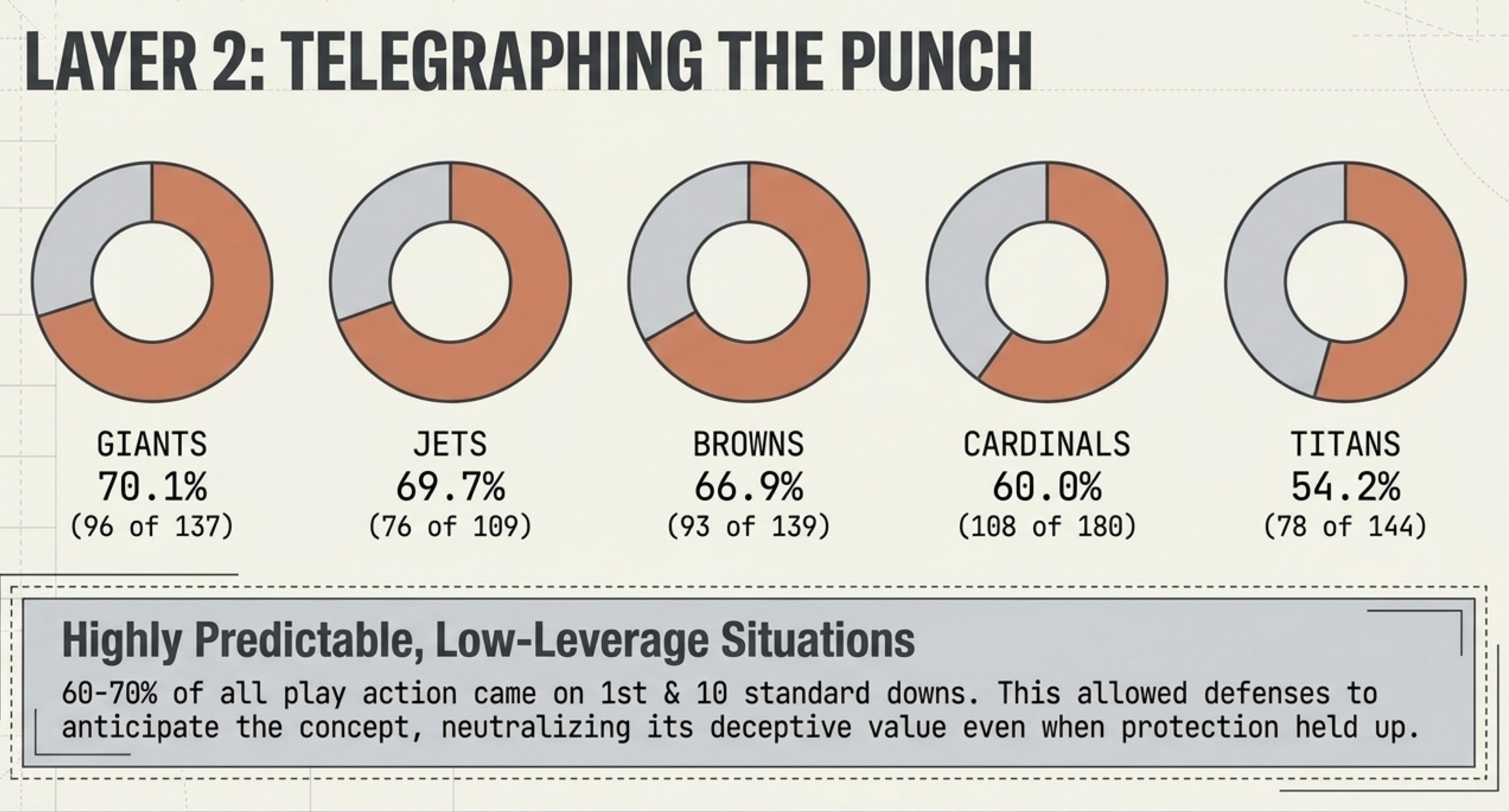
Many of the league’s worst teams became extremely predictable, calling 60-70 percent of their play-action passes on first-and-10 while largely abandoning the concept on second down. That allowed defenses to anticipate when play action was coming, reducing one of football’s most effective offensive weapons into a predictable tendency. Teams with better second-down play-action usage consistently found greater success attacking defenses that had committed extra defenders to stop the run.
Tight Ends Don’t Make Up for a Poor O-line s
The Raiders offered perhaps the best example of why talent alone isn’t enough.
Despite boasting one of the NFL’s better tight end groups, Las Vegas still struggled offensively because poor first-down rushing success and one of the league’s highest pressure rates left the offense behind schedule. Without consistent protection, even quality skill players couldn’t overcome the structural problems surrounding them.
That’s where Miami’s offseason changes become significant.
None of this guarantees a playoff run. Miami still faces one of the league’s toughest schedules, and a roster filled with rookies and a new coaching staff will experience growing pains.
However, the evidence suggests there’s a wide gap between being a rebuilding team and becoming one of the NFL’s worst. The offenses that bottomed out last season failed across multiple foundational areas simultaneously. If Miami avoids those cascading failures by protecting the quarterback, staying on schedule and using play action more effectively, a five-to-eight-win season appears far more realistic than a collapse into the one-to-four-win range.