

Phins boast the 2nd most ammo of the 2026 Draft
The Miami Dolphins are sitting in one of the most powerful positions in the 2025 NFL Draft—and with that comes a level of expectation this franchise hasn’t handled well in the past.
Armed with 11 total picks and the second-highest draft capital in the league, Miami isn’t just participating in this draft—they’re positioned to shape it. But history tells us that having the ammo and hitting the target are two very different things.
We’ve seen this before.
Will this time be different under the leadership of Jon-Eric Sullivan?
We are only days away from finding out.
Phins 2020 Draft was stacked too
The 2020 draft gave Miami a similar stockpile of opportunity. Multiple premium picks, high expectations—and ultimately, a return that fell well short of what it should have been. That failure is exactly why this draft feels different, though. Not just important—but defining.
So what should fans realistically expect?
Let’s start with the baseline.
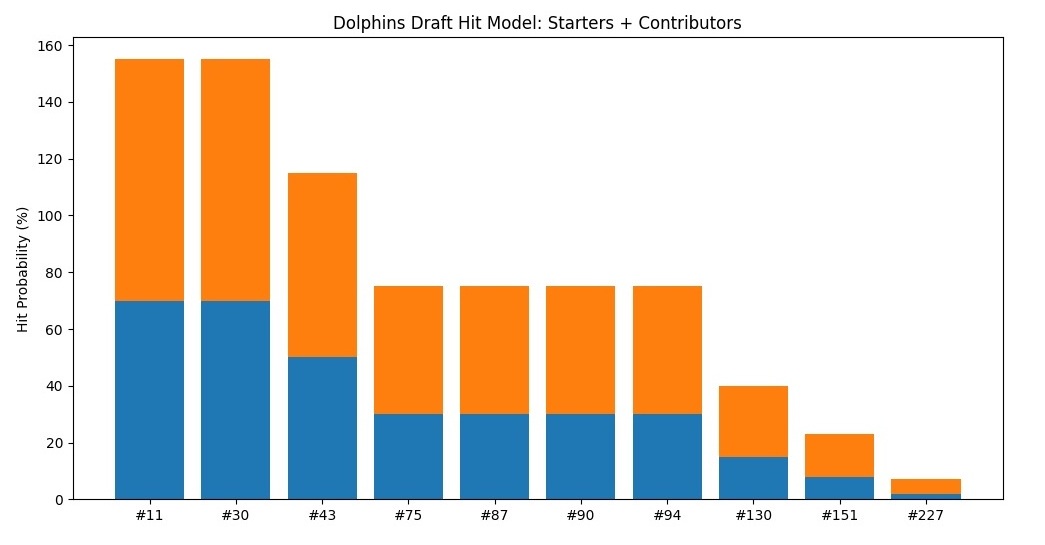
Historically, first-round picks carry about a 60–65% chance of becoming quality starters, with an even higher probability of at least contributing. With picks at 11 and 30, Miami should walk away with two impact players. That’s not optimistic—that’s the minimum requirement.
The second round, particularly early selections like pick 43, still offers roughly a 50% chance at landing a quality player. That’s where good drafts start to separate from average ones.
Then comes the real opportunity: the third round.
3rd Round is the key to the draft
With four picks clustered between 75 and 94, the Dolphins are sitting in what many around the league consider the “sweet spot” of the draft. While individual hit rates drop into the 30–35% range for quality starters, the volume of picks gives Miami a legitimate chance to uncover multiple contributors—or even another starter.
This is where great drafts are made.
Beyond that, you can bet with the best pay per head that the later rounds become a numbers game. Hit rates drop sharply, but even finding rotational players or special teams contributors adds long-term value to a roster.
When you put it all together, a realistic expectation for this draft looks like this:
- Minimum (Average Draft): 2–3 starters, limited long-term impact
- Good Draft: 3–4 starters, plus 1–2 solid contributors
- Elite Outcome: 5+ starters with multiple high-end players
Given Miami’s draft capital, “average” simply isn’t good enough.
This is where the pressure shifts to general manager John Eric Sullivan and head coach Jeff Halfley. They’ve made bold decisions, including moving on from proven talent to accumulate picks. That strategy only works if those picks turn into real players.
This isn’t about hitting home runs at every selection. It’s about stacking quality. Finding four dependable starters and a couple of contributors would fundamentally reshape the roster and accelerate the Dolphins’ timeline.
Anything less?
It risks repeating the cycle that has held this franchise back for decades.
With great draft capital comes real responsibility—and the Dolphins are officially out of excuses. Let’s hope they are full of answers!
Go Phins!!!