Is this a real re-build and one we can believe in?
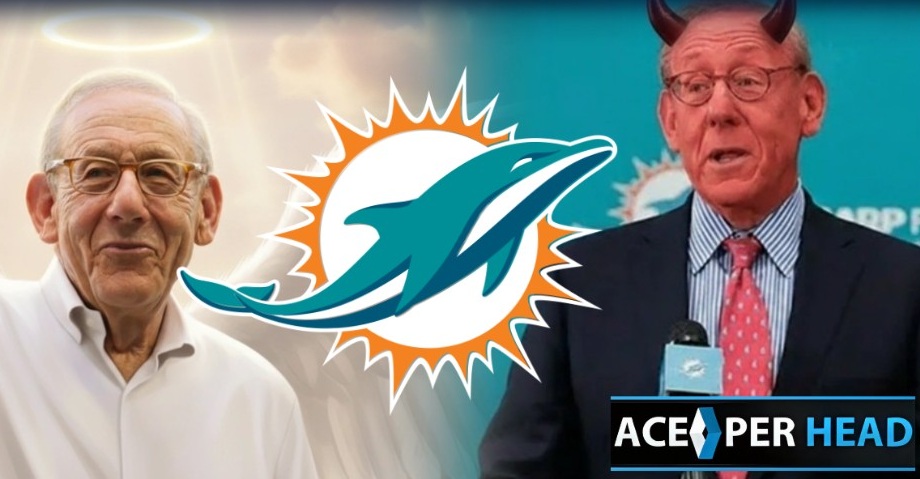
The Miami Dolphins have been sold fans a bill of good that has failed to deliver even a moderate amount of success throughout the ownership of Steven Ross. What we fans have received is unending dysfunction and letdown. But there has been a lot that’s happened this season and offseason to say, maybe, just maybe Ross is attempting to head in a new direction.
This isn’t about predicting wins. It’s about inputs pointing to Ross changing the way he does business.
In football analysis, anomalies create data points. Three connected data points don’t prove truth—but they do create a trend. And trends increase the odds of accuracy. That’s the lens through which the Miami Dolphins’ current transformation should be evaluated. Not hope. Not history. Behavior.
Let’s Track the Recent History of Events
For decades, the Dolphins have followed a familiar pattern: aggressive spending, star-chasing, short timelines, and resets that changed faces but not structures. What’s happening now looks different—at least in how the organization is behaving.
You can bet with the best pay per head a great place to start is with spending discipline.
Under owner Stephen Ross, Miami historically overspent to compensate for instability. This offseason Brandon Shore froze spending and contracts. That’s anti-Ross behavior. Bad teams spend emotionally. Disciplined teams don’t.
Ross also publicly refused an estimated $15 billion offer to sell the franchise. That matters. Owners preparing to exit usually inflate optics and cut costs. Ross did neither. Instead, family governance was added—his son-in-law brought in for oversight, not football operations. You don’t install family if you’re leaving. That signals legacy thinking, not liquidation.
The hardest break came when longtime general manager Chris Grier was fired. Grier survived multiple regimes precisely because Ross avoided full resets. Cutting that cord mattered more than any individual hire. It signaled a willingness to absorb short-term pain to change long-term outcomes.
Upper Management Moved Matched on the Field Direction
On the field, symbolism followed structure. Tua Tagovailoa was benched—not as a tactical decision, but as a cultural one. Sacred-cow protection ended. Evaluation replaced insulation. That’s a quiet but meaningful shift in accountability.
Ross also imported football gravity. Retaining Jimmy Johnson in an advisory role and adding Troy Aikman wasn’t nostalgia—it was authority laundering. When ownership no longer trusts itself to lead football decisions, it borrows credibility from those who have earned it.
Behind the scenes, business-side professionals Adam Engroff and Anthony Hunt were fired. No press blitz. Just process. Serious organizations professionalize silently.
The football power center shifted with the hiring of Jon‑Eric Sullivan, a Packers-tree executive associated with decentralized authority and scout-driven evaluation. He wasn’t brought in as a savior, but as a structure. That structure deepened with the addition of Kyle Smith as assistant GM—a shared-authority model that recognizes systems scale better than lone decision-makers.
The middle of the organization was scrubbed too. Marvin Allen and other long-tenured staffers were removed. Culture lives in the middle, not the headlines, and fake resets never touch that layer.
Even special teams were treated seriously. Veteran coordinator Chris Tabor was hired after overseeing a mid-to-upper-tier unit in Buffalo, complete with All-Pro return production. Hidden yardage matters to serious teams.
Perhaps the loudest signal has been the absence of noise. No billboards. No savior narrative. No “all-in” slogans. Silence, in this case, is a tell.
This Doesn’t Mean Success, but Change Create the Possibility
But patterns matter. And for the first time in 20 years, the Dolphins aren’t acting like the Dolphins.
This may fail—but it’s failing differently. Different inputs don’t guarantee success. They change the odds.
Given how idiotic we’ve operated, at least these changes 100% guarantee addition by subtraction. And, for Miami that’s a huge step forward. Looking to create stability, conventionality, and fundamental philosophy isn’t flashy, but it’s a massive first step for a franchise stuck in moronic stupidity.