

Dolphins pushed the AFC champs, but imploded in the 2nd Half
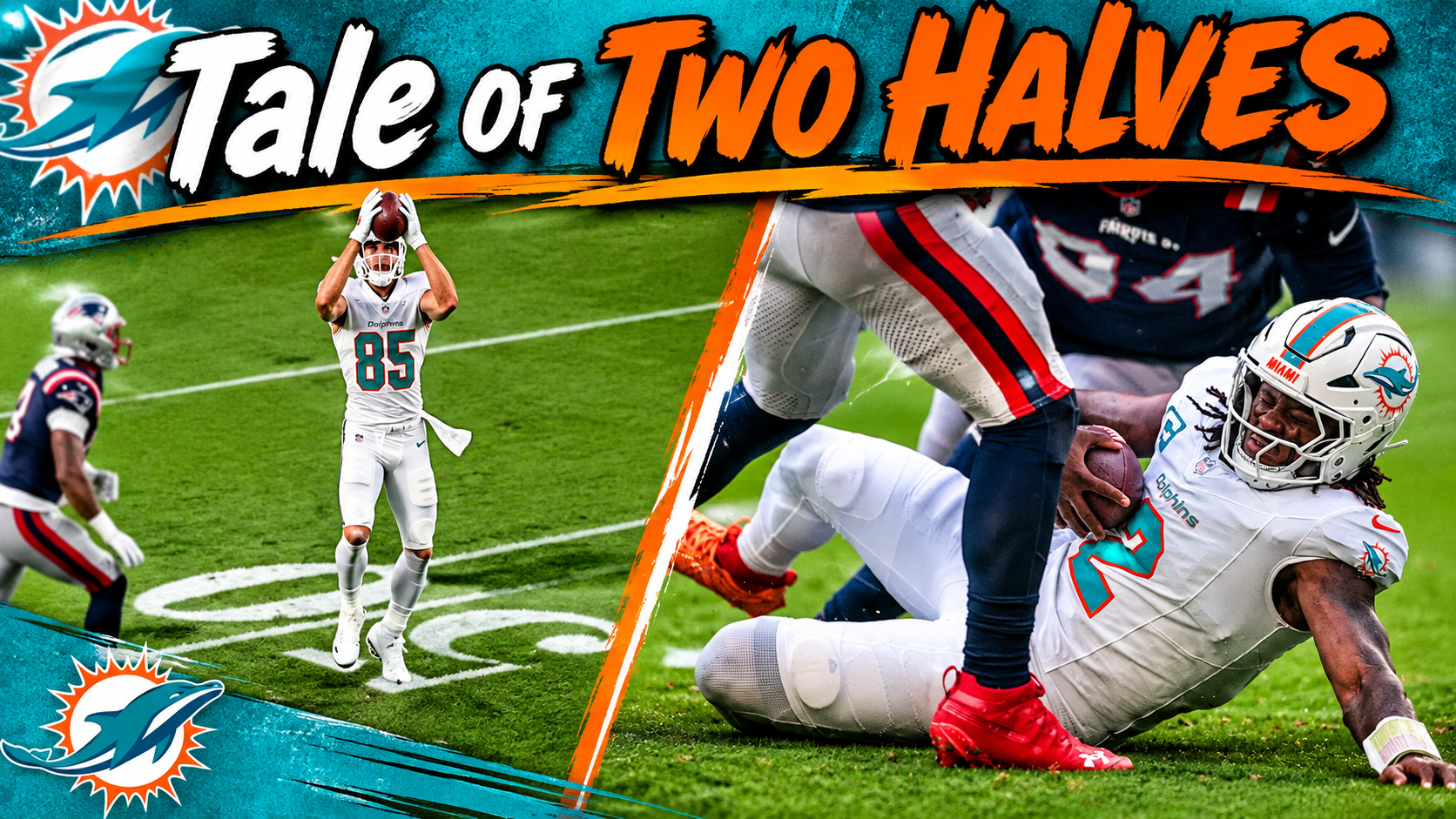
The Miami Dolphins went toe-to-toe with one of the AFC’s top teams but ultimately let an opportunity slip away. Despite the loss, there were reasons for optimism. Miami is a young team with significant salary-cap flexibility heading into next season, and the talent gap between this roster and a Super Bowl-caliber opponent could look very different after another draft and free agency.
But potential doesn’t win football games. Execution does. And Sunday’s game showed both how far the Dolphins have come and how much work remains.
Offensive Gameplan Was Curious
The biggest issue started with the game plan. Before kickoff, the matchup presented a clear challenge: New England’s strength is attacking between the tackles with inside zone, while Miami has struggled defending interior runs. On the other side, Miami’s outside-zone-heavy offense was facing a wet field without Proctor, a significant piece of its offensive line.
Yet Miami opened with outside-zone runs and struggled to establish anything. Wet conditions make the lateral movement and footing required for outside zone especially difficult. The Dolphins eventually found success when they committed more to the interior, giving Willis a better framework and allowing players like Ollie Gordon, Malik Washington, and Pop Douglas to make plays.
That fourth offensive drive was a glimpse of what this offense can become. Willis delivered under pressure, Gordon ran with authority, Douglas made a beautiful catch against Gonzalez, and Washington finished the drive with a touchdown. Miami went into halftime with a 13-6 lead and momentum.
Then came the second half.
Miami Had Another 3rd Quarter Collapse
The offense lost its rhythm, and the Patriots began imposing their will with a physical running game. New England’s repeated inside runs were body blows that gradually wore down Miami’s defense. Meanwhile, Miami drifted away from the approach that had worked, mixing in questionable concepts and failing to establish the same physical presence.
There were individual positives. Chop Robinson continued to emerge as a legitimate defensive force, Seiler contributed a sack, and the defense showed stretches of toughness. Willis also demonstrated that he can operate effectively when the offense gives him the right structure. But consistency remains a concern, as does the coaching staff’s ability to adapt when the original plan isn’t working.
Miami’s secondary still needs attention, particularly the pairing of players who lack top-end athleticism in man coverage. The offensive line needs reinforcements–how big is Proctor’s impact? The coaching staff must also find a more reliable balance between its preferred running schemes and the personnel available.
This was a frustrating loss because Miami was in position to win. But you can bet with the best pay per head that it was also revealing. The Dolphins have pieces worth building around. With roughly $179 million in projected cap flexibility and another draft ahead, the opportunity to improve is substantial.
The direction is encouraging. Now comes the harder part: turning potential into four quarters of winning football.
Go Phins!!!