

Offensive Line Makes the NFL World Go ‘Round
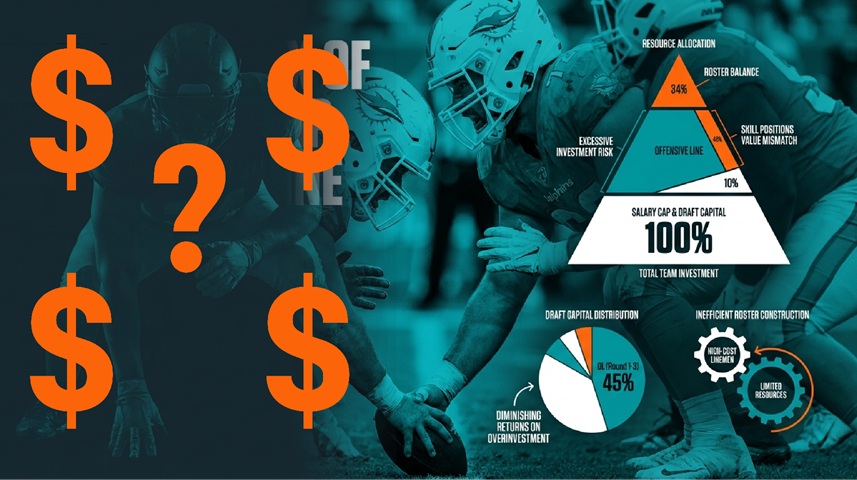
Every NFL draft season brings a familiar refrain from fans: the offensive line must be fixed immediately. For Dolphins supporters, that often translates into a simple expectation — spend first-round picks on linemen until the unit is solved. But the reality of modern roster building is far more complicated. As Miami’s front office evolves under general manager Jon Eric Sullivan, fans may begin to see a philosophy that looks different from the traditional “draft a lineman early” mindset.
That doesn’t mean the Dolphins are ignoring the offensive line. In fact, the opposite is often true. Many of the NFL’s most consistently competitive teams — including the Green Bay Packers organization where Sullivan developed much of his personnel philosophy — build offensive lines using a balanced approach rather than stacking premium picks at one position.
Building the Phins O-line is Critical
The reason smart teams build an offensive line smartly is rooted in the economics of the modern NFL. Draft capital and salary cap space are limited resources. First-round picks carry the highest expectations and often command major second contracts if they develop into quality starters. If a team invests too many premium picks into one position group, it can eventually create a financial bottleneck. Five successful offensive linemen coming off rookie contracts could easily command close to $100 million combined per year. Add a franchise quarterback, and suddenly half of the salary cap is tied up in one side of the ball.
You can bet with the best pay per head that this is why some of the league’s most stable organizations focus on building offensive lines through development. The Packers have long been known for drafting linemen in the middle rounds, developing them patiently, and allowing depth to compete. That approach doesn’t always produce immediate headlines, but it often creates a pipeline of capable starters at sustainable costs.
Sullivan will follow this draft philosophy. So, while we might draft a O-linemen with the 11th Overall pick, if we don’t, fans shouldn’t think he has failed.
Fans should keep this in mind. This decision wouldn’t necessarily signal neglect or a repeat of past frustrations. Instead, it may reflect a broader roster-building strategy — one designed to spread premium resources across the entire team while trusting scouting and development to uncover offensive line talent beyond the top of the draft.
In fact, many strong offensive lines across the league feature mid-round success stories. Teams that excel at identifying and developing these players gain a significant advantage. A fourth- or fifth-round pick who becomes a reliable starter provides tremendous value compared to the cost of acquiring similar production through free agency.
The Challenge of Rebuilding a Gutted Offensive Line AND Roster
Sullivan’s challenge in Miami will be balancing immediate needs with long-term sustainability. The Dolphins, like every contender, must build a roster that can support an expensive quarterback while maintaining talent across defense, skill positions, and the offensive line.
So if draft weekend comes and Miami’s first pick isn’t an offensive lineman, it shouldn’t automatically be interpreted as a failure or a return to old habits. Instead, it may simply be the Dolphins embracing a proven roster-building philosophy — one that prioritizes balance, development, and long-term competitiveness over draft-night optics.
It will certainly make the challenge of finding the right offensive linemen harder, but if he’s the right man for the job, he’ll stick the landing.
Fingers crossed.
Go Phins!!!